


BOISE, IDAHO – December 2, 2025 – Intermountain Gas Company has debuted new technology to help detect gas line leaks and improve efficiency while meeting regulatory standards.
The utility has installed Picarro’s leak detection technology in one of its vehicles, enabling crews to conduct leak surveys more efficiently with a higher degree of accuracy.
While driving through neighborhoods, the car “sniffs” the air using sophisticated monitoring equipment that measures the amount of methane in the air. Methane is the primary component of natural gas. Natural gas is odorless, so utilities, including Intermountain Gas, add an odorant, mercaptan, to the natural gas to give it a rotten egg-like smell to help alert people to leaks. The Picarro equipment measures methane plumes in the air to help gas company crews locate the source of any possible system leaks.
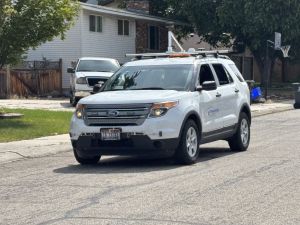
The Picarro-equipped vehicle will augment the current technology Intermountain Gas utilizes for required leak surveys, which measures methane in parts per million, while the Picarro system measures in parts per billion. This results in more accurate reading and enhanced ability to detect possible leaks in the network.
“The use of the Picarro technology will allow us to complete required leak surveys faster and with higher accuracy,” said Eric Martuscelli, VP, Field Operations & Customer Experience for Intermountain Gas. “While we will still use our current survey methods, the Picarro car will enhance our ability to serve customers and achieve regulatory compliance.”
The system includes a high-precision gas analyzer, which is approximately 1,000-times more sensitive than traditional leak detection equipment, capable of detecting leaks down to one part per billion in ambient air while reducing false positives from naturally occurring methane. To account for wind and other atmospheric changes, the Picarro car will survey a pipeline route three times to get accurate information. The vehicle will conduct most of its surveys at night, to minimize the chance of inaccurate readings due to atmospheric conditions.
Intermountain Gas will be able to deploy the new vehicle in any of the 74 communities it serves across southern Idaho.